
There’s a quiet misunderstanding baked into most conversations about emotive marketing.
When people hear the phrase, they tend to jump to extremes. Big feelings. Tugging heartstrings. Manufactured outrage. Sad piano music under stock footage. The assumption is that emotive marketing is about provoking emotion.
It isn’t.
At least, not the way Beholde understands and practices it.
True emotive marketing isn’t about stirring people up. It’s about recognizing that people are already emotional, long before they encounter a brand — and choosing to speak to that reality with intention, clarity, and respect.
Emotion Isn't the Tactic. It's the Context.
Every decision a person makes is filtered through emotion first and logic second. This isn’t a hot take. It’s well-documented psychology. Even the most “rational” buyer is still making choices based on comfort, trust, identity, fear, relief, aspiration, or belonging.
That means all marketing uses emotion, whether it admits it or not.
What most brands get wrong is assuming that emotive marketing means adding emotion — layering it on top like a garnish. A dramatic headline here. A sentimental story there. A color swap when things feel stale.
That approach usually backfires.
Because emotion isn’t something you bolt onto messaging. It’s something you align with.
Emotive Marketing is Alignment, Not Amplification.
At its core, emotive marketing is about alignment between four things:
Who the brand truly is
What the audience already feels
How the message is expressed
What response the brand is asking for
Miss any one of those, and the whole thing feels off.
That’s why so much “emotional” marketing comes across as manipulative or hollow. It’s loud, but not grounded. Polished, but not believable. Designed to provoke a reaction instead of build a relationship.
Beholde’s approach starts from the opposite direction.
Instead of asking, “How do we make people feel something?”
The better question is, “What are people already feeling—and how should this brand meet them there?”
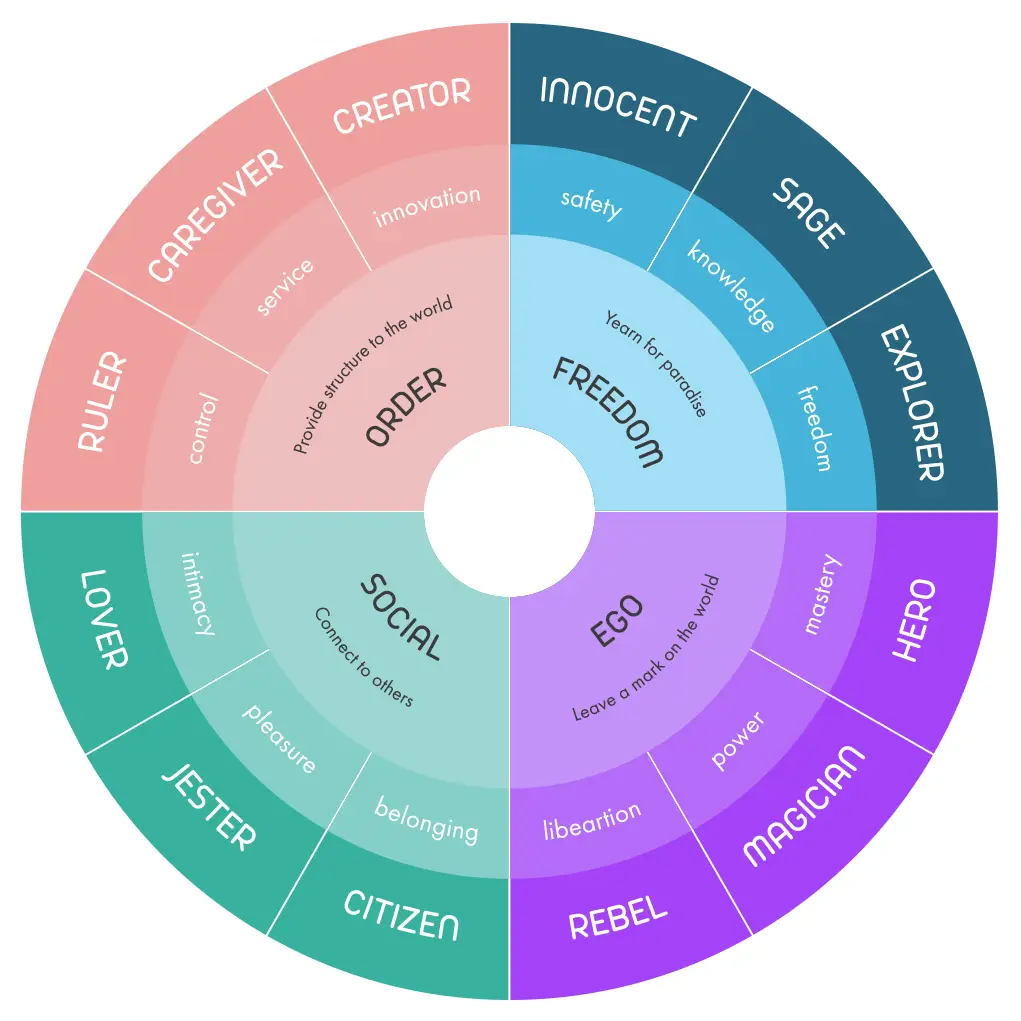
This is where Jungian archetypes matter — and where they’re often misunderstood.
Archetypes aren’t personality quizzes or clever labels. They’re psychological patterns that help explain why certain messages feel safe, inspiring, authoritative, or comforting — while others fall flat.
When Beholde talks about caregiver, ruler, and creator energy, it’s not about aesthetics or vibes. It’s about intention.
Caregiver brings reassurance, steadiness, and trust.
It says: You’re not alone. You’re taken seriously.Ruler brings clarity, structure, and confidence.
It says: This is under control. There’s a plan.Creator brings imagination, originality, and possibility.
It says: There’s a better way — and we can build it.
When those are used deliberately — rather than accidentally — you stop guessing at tone. You stop chasing trends. You stop sounding like everyone else.
You start sounding like yourself, consistently.
This is Where 'Science' Lives
Another common misunderstanding is that emotive marketing is soft or abstract.
In reality, it’s highly technical.
It lives in details most brands treat as afterthoughts:
Color choices that reinforce trust instead of urgency
Language that signals safety instead of pressure
Imagery that reflects identity instead of aspiration alone
Pacing that respects attention rather than hijacking it
Techniques like joy-based marketing, nostalgia, personalization, and trust-building aren’t standalone tricks. They’re tools that only work when used in the right emotional environment.
For example:
Nostalgia without relevance feels self-indulgent.
Aspirational messaging without trust feels unreachable.
Personalization without boundaries feels invasive.
“Surprise and delight” without brand consistency feels random.
Emotive marketing is knowing when to use each lever — and when not to touch it at all.
Representation Matters More Than Performance
One of the biggest shifts brands have to make is moving from performing emotion to representing reality.
People are deeply attuned to authenticity — not in the buzzword sense, but in the intuitive sense. They can feel when a brand understands them versus when it’s trying to influence them.
That’s why emotive marketing isn’t about telling better stories.
It’s about telling truer ones.
Sometimes that means warmth.
Sometimes it means restraint.
Sometimes it means confidence without hype.
Sometimes it means acknowledging uncertainty instead of pretending everything is perfect.
The goal isn’t to be liked in the moment. It’s to be trusted over time.
We’re entering a marketing landscape flooded with competent content.
AI can generate clean copy.
Automation can optimize delivery.
Templates can make everything look “good enough.”
What’s becoming rare is resonance.
When every brand has access to the same tools, the differentiator isn’t output — it’s understanding. Emotional understanding. Human understanding. The kind that can’t be scraped, cloned, or scaled without intention.
Emotive marketing done well doesn’t shout louder.
It speaks more clearly.
It doesn’t chase attention.
It earns permission.
And it doesn’t manipulate emotion.
It respects it.
The Point Isn't Emotion. It's Connection.
At Beholde, emotive marketing isn’t a tactic or a flavor of the month. It’s a way of working that assumes people are complex, perceptive, and worthy of thoughtful communication.
The work isn’t about getting inside someone’s head.
It’s about meeting them where they already are — and showing up consistently enough that they’re willing to stay.
That’s what most brands misunderstand.
Emotion isn’t the hook.
It’s the environment.
And when you design for it deliberately, everything else — clarity, trust, response — starts to fall into place.